Simple external collaboration for legal teams
Product Closing Folders Industry Legal Technology Role Principal Product Designer
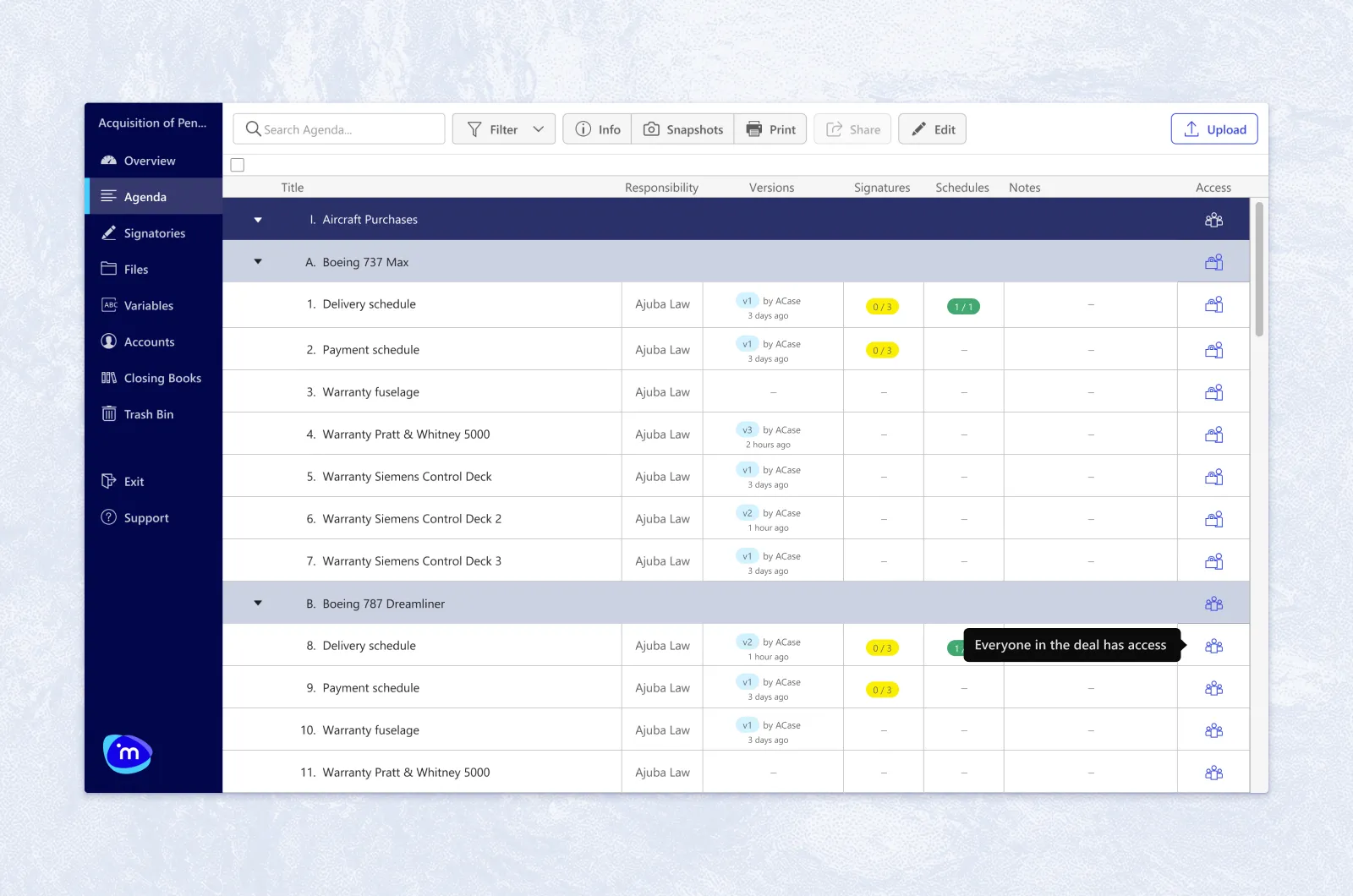
Closing Folders is software that helps corporate lawyers run complex deals from kickoff to closing. Historically, these deals were run by email and physical documents. Closing Folders digitized this process, centralizing documents, signatures, and closing artifacts in cloud-based software.
The model proved successful, with Closing Folders defining the legal transaction management category and going on to be acquired by iManage in 2020.
Cloud software without true collaboration
Since its inception, Closing Folders had minimal support for role based access control. If an external user (e.g., opposing counsel) was invited to a deal, they could see everything. This functional gap created several problems:
- Hacks and workarounds
- To collaborate safely, deal owners would clone deals, remove private data, then share the cloned deal with external parties. This created significant data synchronization problems.
- Avoided collaboration
- Faced with the lack of proper access control, many teams avoided external collaboration altogether.
- Blocked sales
- The missing controls became a recurring objection during the sales process, stalling deals that were otherwise healthy.
- Stymied growth
- Without a clean way to collaborate with external parties, the product struggled to spread virally through organic usage.
How much control is enough
RBAC systems can spiral into a mess of configuration options and baffling UI if designed without clear constraints. To ensure we built only what was absolutely necessary, the Closing Folders' Product Manager and I ran discovery interviews over a 4-week campaign. We spoke with users and customer-facing staff, working to answer crucial questions like:
What level of granularity should be applied to access control?
Why it matters: The more complex the solution, the longer it takes to build, the harder to maintain, and the more likely to confuse users.
Default visibility rules for new deals?
Why it matters: Getting this wrong would make unnecessary work for users with every new deal created.
Redact or completely hide restricted content from external users?
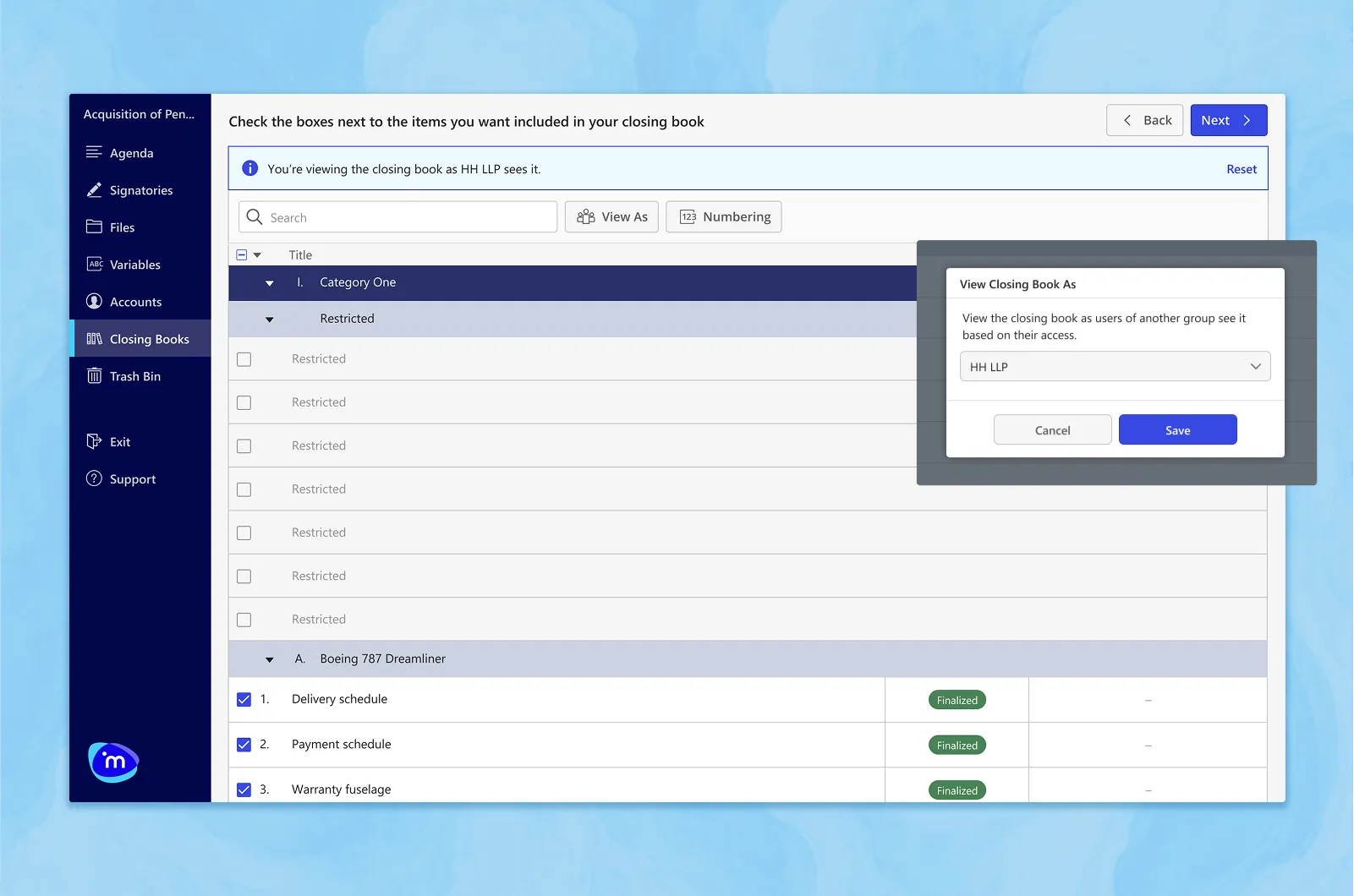
Why it matters: Redaction had the potential to raise suspicion from opposing counsel. Hiding content would change the numbering system of closing checklists entirely. Which was the lesser of two evils?
Convention over configuration
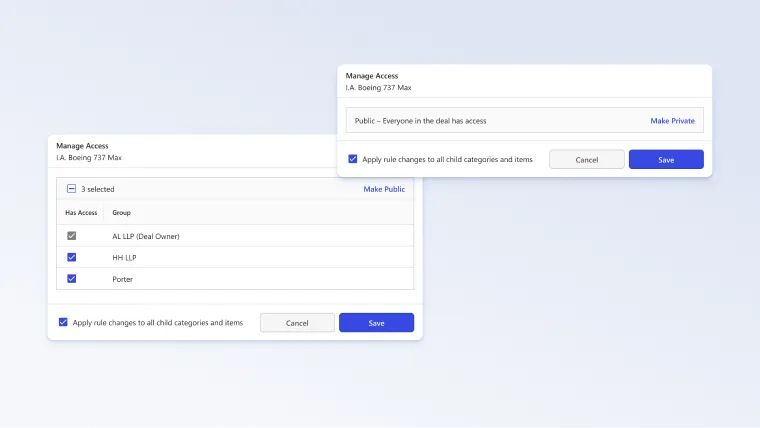
Ultimately, a simple, opinionated approach to access control was optimal for our users and the business. Users needed something that was easy to understand and manage, even if it didn't satisfy 100% of their needs. Access control was established on high-level objects and groups, with rules flowing down to child elements. The result was simple to use and easy to maintain over the long term.
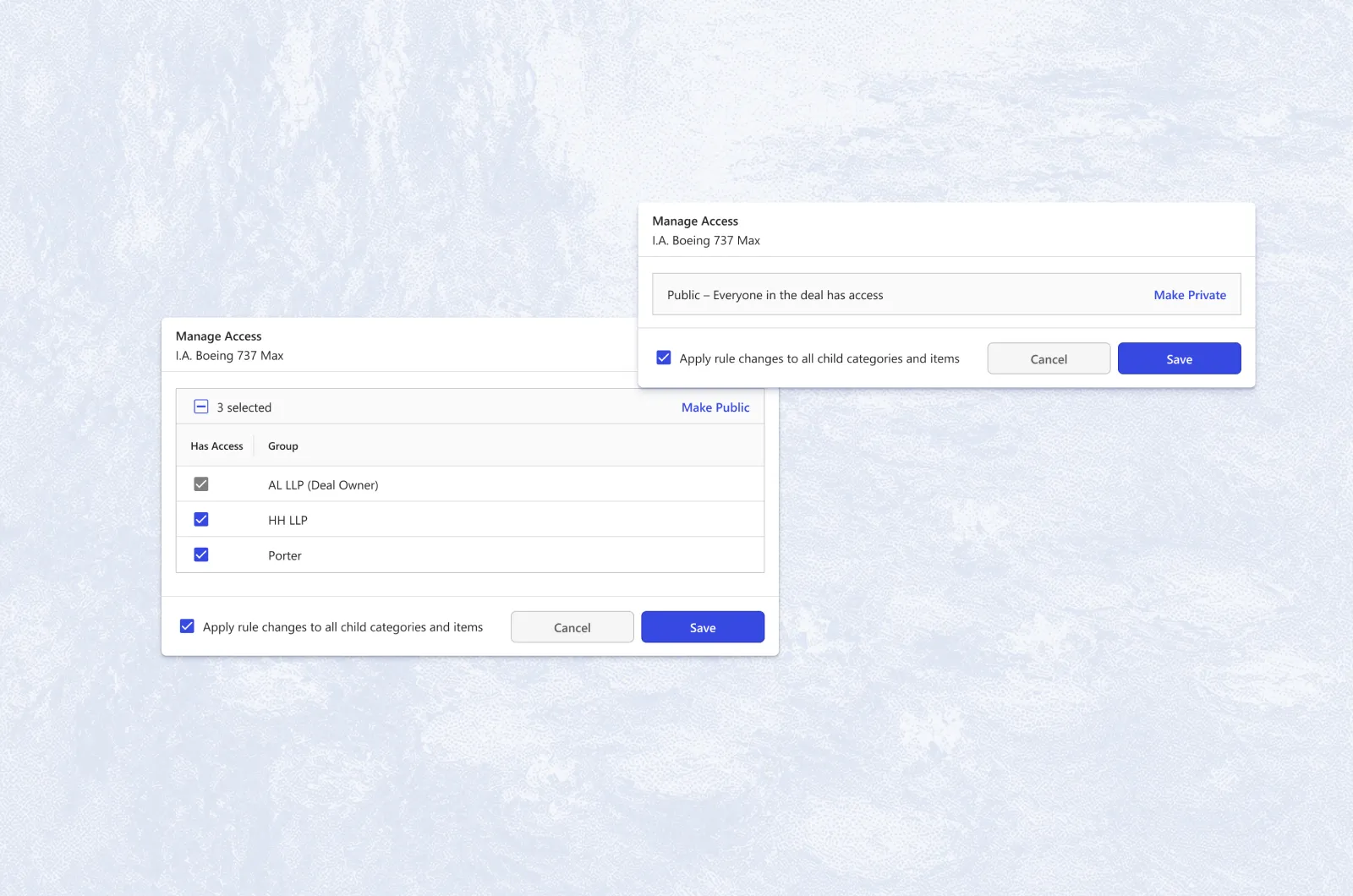
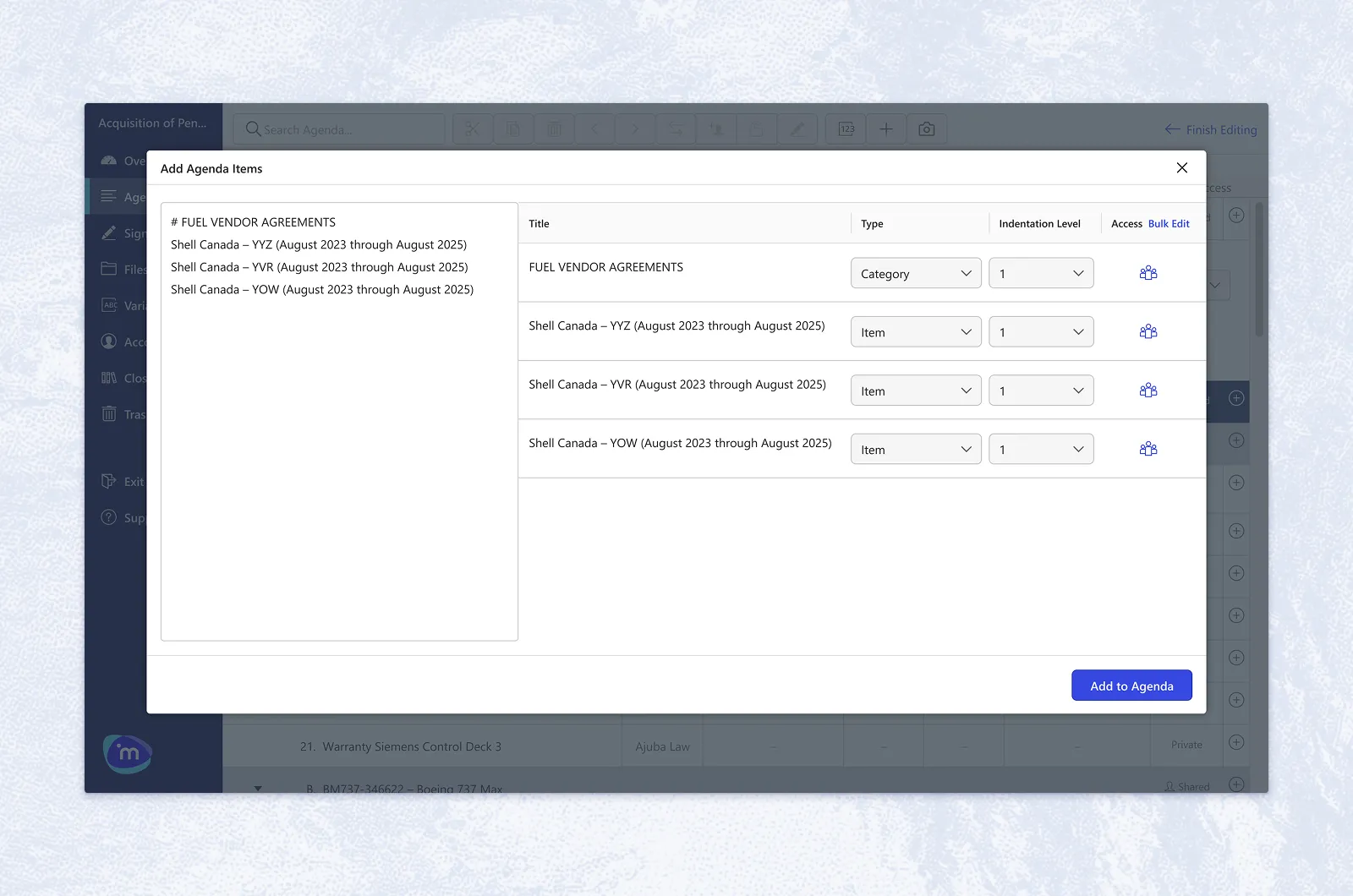
Hacks gone, objections removed
- Strong adoption
- Within three months of launch, 42% of deals had at least one object set to private. By the one year mark that climbed to 65%.
- The hack died
- Follow-up surveys showed reliance on the old clone workaround had fallen to zero.
- Sales got their pitch back
- Access control objections all but vanished from conversations, freeing the team to sell on the strengths Closing Folders could win on.
- Scoped just right
- The modest volume of follow-up requests told us we had landed on the right level of detail rather than over-building.